Safety
Safety & equipment guidance
General information only. It does not replace manufacturer instructions, formal operator training or applicable regulations.
Choosing equipment
- • Match rated capacity to your heaviest load, including attachments and load center.
- • Confirm required lift height and lowered mast height for doorways.
- • Electric suits indoor, emission-sensitive spaces; diesel and rough-terrain suit outdoor uneven ground; LPG covers mixed use.
- • Measure aisle widths — reach trucks and order pickers suit narrow aisles.
Operator safety
- • Only trained and authorized operators should use powered industrial trucks; employers are responsible for training and evaluation under applicable OSHA requirements.
- • Wear seatbelts where fitted and appropriate PPE.
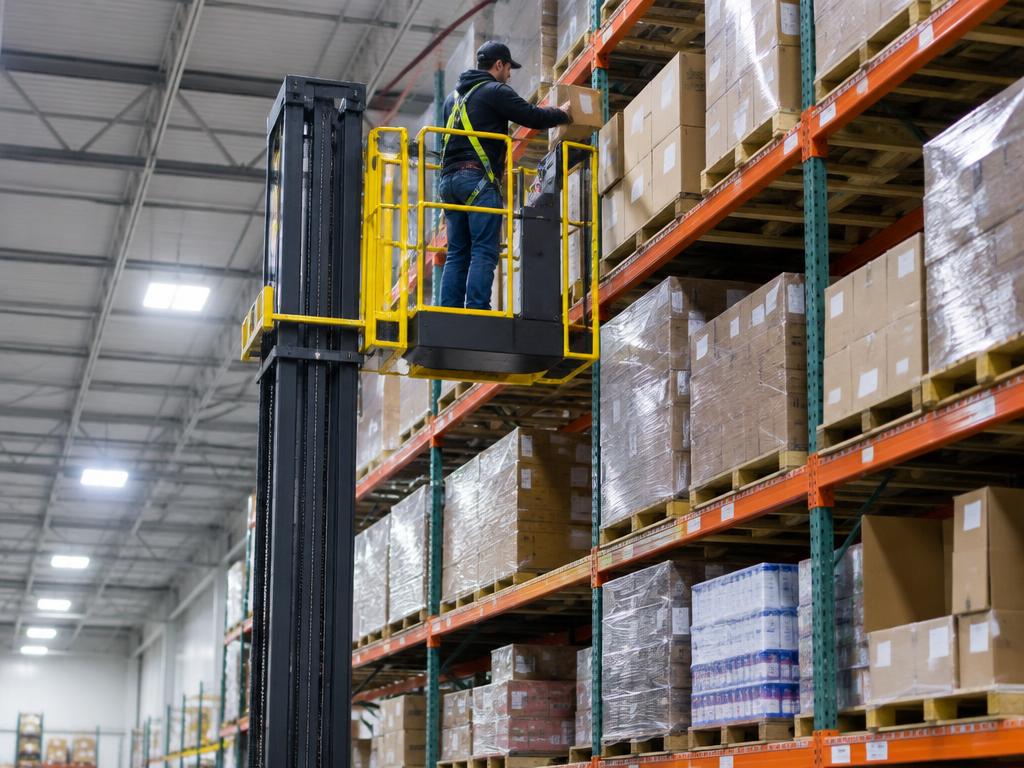
- • Never carry passengers or lift people except on equipment designed for it.
Pre-use inspection
- • Check tires, forks, chains, mast and hydraulic lines for damage or leaks.
- • Test brakes, steering, horn, lights and alarms.
- • Check fluid levels, battery charge or fuel. Remove from service and report any defect.
Safe material handling
- • Keep loads low, tilted back and within rated capacity.
- • Travel slowly on ramps and keep loads uphill.
- • Watch for pedestrians, overhead obstructions and floor load limits.